If you're selling, letting, or buying a property in Cannock, you'll encounter an Energy Performance Certificate (EPC) at some point. But what does that colourful A–G chart actually mean for you — and could a poor rating be costing you money without you realising it? In this guide, I'll explain exactly what an EPC is, how assessments work, and — crucially — what you can do to improve your rating before you put your home on the market.
As a Domestic Energy Assessor (DEA) and part of the Cannock Surveyors team, I've completed hundreds of EPC assessments across Staffordshire. Here's what I wish more homeowners understood from the outset.
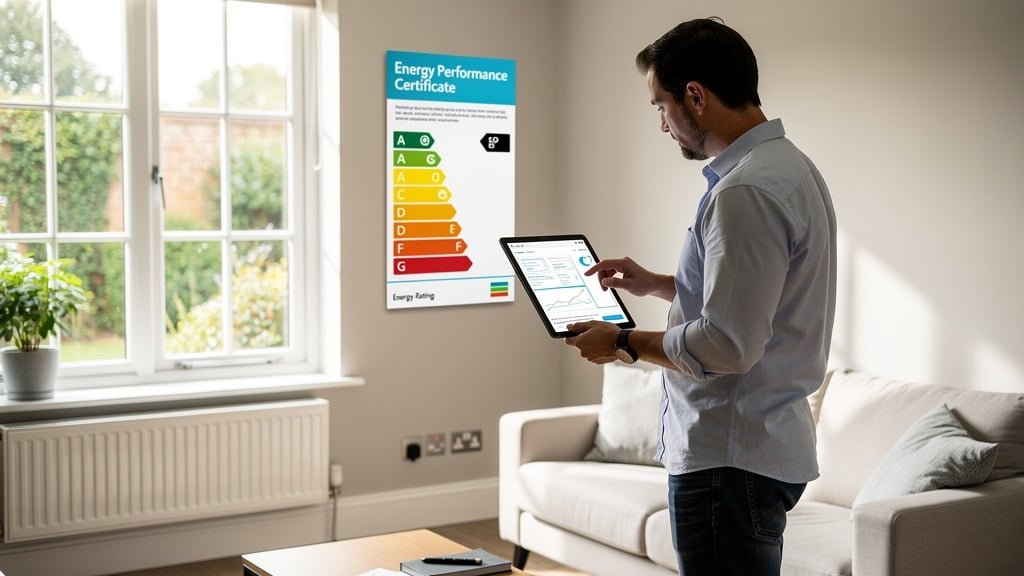
What Is an Energy Performance Certificate?
An EPC is a document that rates how energy-efficient a property is on a scale from A (most efficient) to G (least efficient). It also shows estimated energy costs and recommended improvements to boost your rating. By law, any property sold or rented in England and Wales must have a valid EPC — one that is no more than ten years old.
The certificate is produced by an accredited Domestic Energy Assessor who visits the property, collects data about the building fabric, heating systems, insulation and lighting, and then enters this into government-approved software. The software generates a score out of 100, which maps to an A–G rating:
EPC Rating Scale
The average home in England currently sits at around a D rating. In older parts of Cannock — particularly the Victorian terraces around the town centre — E and F ratings are not uncommon, largely because of solid brick walls, single glazing, and older boilers.
Why Does Your EPC Rating Matter?
There are three key reasons to care about your EPC rating: legal obligations, sale value, and running costs.
Legal Obligations for Landlords
Since April 2020, all privately rented properties in England and Wales must achieve at least an E rating. The government has proposed raising the minimum to C for new tenancies — though the precise implementation date has been debated. If you're a landlord in Cannock or wider Staffordshire, it's worth getting an updated EPC assessment now so you have time to plan any necessary improvements.
Failing to meet the minimum EPC threshold can result in fines of up to £30,000 — so this isn't something to leave until the last minute.
Impact on Sale Price
Research by property portal Rightmove found that homes with an A or B EPC rating sell for an average of 4.7% more than comparable D-rated homes. For a £220,000 property — around the Cannock average — that's over £10,000. Meanwhile, homes rated E, F or G tend to attract lower offers and longer sales periods, as buyers factor in the cost of future upgrades.
I've seen this first-hand on surveys in Cannock. A property in Hednesford came back with an F rating — the owners had never updated the insulation since the 1970s. After we recommended loft and cavity wall insulation, they invested around £2,500 and the rating jumped to a D. The eventual sale price reflected that improvement.
Running Costs
The EPC shows estimated annual energy costs — heating, hot water and lighting — calculated under standard occupancy assumptions. The difference between an F-rated home and a C-rated one can easily be £1,000 or more per year. As energy prices remain high, buyers are increasingly focused on these figures when comparing properties.
How Is an EPC Assessment Carried Out?
When I carry out an EPC assessment, I'm collecting specific data that the software needs to calculate your score. Here's what I look at during a typical visit:
- Property type and age: A 1920s semi-detached has very different baseline energy performance to a 2015 new-build. The construction type affects the modelled heat loss significantly.
- Wall construction: Solid walls, cavity walls, or modern insulated timber frame? Cavity wall insulation dramatically reduces heat loss and is one of the biggest rating-boosters available.
- Loft and floor insulation: I'll check the depth of loft insulation (the minimum recommended is 270mm) and whether there's any floor insulation beneath ground-floor rooms.
- Windows and glazing: Single, double, or triple glazed? The date of installation helps determine the likely U-value (thermal performance) of the glazing units.
- Heating system: Boiler type, age, and efficiency are crucial factors. A modern A-rated condensing boiler scores far better than an old heat-only boiler or electric storage heaters.
- Renewable energy: Solar PV panels, solar thermal water heating, heat pumps — all of these can significantly lift your rating.
- Lighting: The proportion of energy-efficient (LED) lighting is also assessed.
The full assessment typically takes 45–90 minutes depending on the size of the property. I'll photograph evidence to support the data and enter it into the government's Register within 24 hours of the visit.
Common Misconceptions About EPCs
Over the years, I've encountered plenty of myths about EPC assessments. Let me clear up the most common ones.
"An EPC is Just a Box-Ticking Exercise"
Many homeowners treat an EPC as a legal formality rather than a useful document. That's a missed opportunity. The recommendations section of your EPC is essentially a prioritised improvement plan — it tells you which upgrades will deliver the biggest rating jump for the least cost. For many Cannock homeowners, loft insulation and boiler replacement will come top of that list.
"I Have Double Glazing, So My Rating Will Be Fine"
Glazing matters, but it's just one element in a complex model. I've assessed properties with modern double glazing that still scored an E because of poor wall insulation and an ageing boiler. Your overall score depends on the weakest links in the thermal envelope — not just one good feature.
"My Old EPC Is Still Valid, So I Don't Need a New One"
Technically true if it's under 10 years old. But if you've made significant improvements — a new boiler, cavity wall insulation, solar panels — your old EPC won't reflect these changes. Getting a new assessment could push your rating up a band or two, which is worth doing before a sale. I've had clients in Rugeley and Burntwood who upgraded their boilers and then discovered their EPC hadn't been updated in eight years — the old D rating on Rightmove was deterring buyers unnecessarily.
"EPC Ratings Are Just Estimates — They Don't Reflect Real Bills"
This one has some truth to it. EPC ratings are based on a standardised occupancy pattern — one family living in the property at a set internal temperature. Real bills will vary based on your actual usage habits, number of occupants, and behaviour. However, the relative comparison between properties remains valid: an A-rated home will genuinely cost far less to heat than a G-rated one under any occupancy scenario.
How to Improve Your EPC Rating Before Selling
If your EPC rating is lower than you'd like, there are targeted improvements you can make. Here's a practical breakdown of the most cost-effective measures for Cannock properties:
1. Loft Insulation (Cost: £300–£600)
If your loft insulation is below 100mm, topping it up to 270mm is one of the cheapest and most impactful improvements you can make. For most properties, this can lift a D rating to a C or a C to a B. It's a straightforward job that a professional installer can complete in a day.
2. Cavity Wall Insulation (Cost: £400–£700)
Most homes built in the UK between the 1920s and 1990s have cavity walls. If the cavity isn't insulated, you're losing a significant amount of heat through the walls. A retrofit installation involves drilling small holes in the external brickwork, pumping insulation in, and filling the holes. The cost is relatively modest, and the long-term savings are substantial. Government grants are sometimes available through the Energy Company Obligation (ECO) scheme — your DEA can advise on eligibility.
3. Boiler Replacement (Cost: £1,500–£3,500)
If your boiler is more than 10–12 years old, replacing it with a modern A-rated condensing combi boiler can be transformative for your EPC score. The efficiency jump from an old G-rated boiler to an A-rated condensing model is enormous. It's a significant upfront cost, but combined with other measures, it often forms the single biggest contribution to a rating improvement.
4. Smart Heating Controls (Cost: £150–£500)
Fitting a programmable room thermostat and thermostatic radiator valves (TRVs) is a relatively inexpensive way to improve your EPC by demonstrating better heating control. It also reduces your actual fuel bills, which is an added bonus.
5. LED Lighting
Replacing all remaining halogen or incandescent bulbs with LEDs is free or very cheap, and the EPC model does reward a high proportion of low-energy lighting. It's an easy quick win before your assessment.
6. Solar PV Panels (Cost: £5,000–£8,000)
If you're looking for a bigger uplift — and you're in the property for the medium term — solar PV panels can push an average D property up to a B or even an A. They also generate an income through the Smart Export Guarantee (SEG), whereby your energy supplier pays you for electricity you export to the grid. Payback periods are typically 6–10 years, and panels add tangible appeal to eco-conscious buyers.
EPCs and the Cannock Property Market
Cannock's housing stock is diverse. The town centre has a mix of Victorian terraces and 1930s semi-detached homes, while areas like Hednesford, Norton Canes and Rugeley feature a blend of post-war social housing, 1970s estates and newer developments. Energy efficiency varies enormously across these different eras of construction.
When I assess a property in a newer development — say, one of the estates built since 2005 — I'll routinely see B or C ratings with little need for improvement. Contrast that with an Edwardian terrace in the older part of Cannock town: solid brick walls (no cavity to insulate), single-pane sash windows replaced with UPVC double glazing, and perhaps a boiler installed a decade ago. A C rating here would be outstanding; D or E is more typical.
The Cannock property market has been increasingly competitive in recent years, and energy efficiency is now a genuine factor in purchasing decisions — particularly for younger buyers who are both cost-conscious and environmentally motivated. Ensuring your EPC is accurate and up-to-date before listing your home is a simple way to maximise interest and achieve the best possible price.
What Happens if Your Property Can't Reach the Required Rating?
Sometimes — particularly with older stone buildings, listed properties, or those with unusual construction — it's genuinely difficult to achieve the required C rating. In these cases, landlords and sellers can apply for an exemption from the government's register, but the evidence bar is fairly high.
If you're in this situation, talking to a qualified surveyor who understands both the technical and legal landscape is essential. At Cannock Surveyors, we can assess your options and help you understand which improvements are feasible given your building's construction — and which ones may actually be inappropriate (for example, external wall insulation isn't always suitable for older buildings and could cause moisture problems).
How Long Does an EPC Last — and Can I Challenge It?
An EPC is valid for 10 years. If you believe the assessment is inaccurate — for example, because the assessor missed existing insulation that wasn't visible on the day — you can request a review or commission a new assessment from a different DEA. If there's a genuine discrepancy, a fresh assessment could yield a better result.
That said, DEAs are trained to find evidence of improvements even when they're not immediately visible — through documentation like building regulations completion certificates, boiler installation records, or cavity wall insulation guarantees. If you've made improvements and have paperwork to prove it, present this to your assessor at the start of the visit.
Frequently Asked Questions About EPCs
Do I legally need an EPC to sell my home?
Yes. You must have a valid EPC before you market your home for sale in England and Wales. Your estate agent or conveyancer will need to reference it. Failing to provide one can result in a fine of £200.
How much does an EPC assessment cost?
Typical EPC assessment costs range from £60 to £120 depending on property size and location. At Cannock Surveyors, we offer competitive rates and can often combine an EPC with a building survey or homebuyer report to save you time and cost.
Can I see my existing EPC online?
Yes. Visit the government's EPC Register at find-energy-certificate.service.gov.uk and enter your postcode or address. All EPCs issued since 2008 are stored here and publicly accessible.
How quickly will I get my EPC certificate?
DEAs are required to lodge the certificate on the national register within 5 days of the assessment, but most will do so within 24–48 hours. You'll receive a PDF copy shortly after.
Does a new boiler always improve my EPC rating?
Almost always, yes — especially if your existing boiler is old and inefficient. A modern A-rated condensing boiler is one of the most impactful single improvements you can make. However, the exact uplift depends on other factors in the assessment model, so the improvement is best viewed in context of an overall improvement plan.
What is the difference between an EPC and a MEES?
MEES stands for Minimum Energy Efficiency Standards — these are the regulations that set the minimum EPC rating for rental properties. The EPC is the document that measures and certifies your property's energy performance; MEES is the legal framework that uses EPC ratings to determine whether a property can be legally let.
Ready for an EPC Assessment in Cannock?
Whether you're preparing to sell, need to comply with lettings regulations, or simply want to understand how to reduce your energy bills, our team at Cannock Surveyors can help. We offer fast, accurate EPC assessments across Cannock, Hednesford, Rugeley, Burntwood and the wider Staffordshire area.
An EPC isn't just a legal requirement — it's a valuable insight into your property's energy performance and a roadmap for improvement. Understanding your rating and acting on the recommendations could save you thousands over the years ahead.
To book an EPC assessment or to combine one with a building survey or homebuyer report, please get in touch with our team. We're here to make the process straightforward and stress-free.
Book Your EPC Assessment Today
Fast, accurate, and competitively priced. Serving Cannock, Hednesford, Rugeley and all surrounding Staffordshire areas.
Get a Free Quote