Here in Cannock, one of the most common questions our clients ask before booking a survey is: "What's the difference between Level 2 and Level 3 — and which one do I actually need?" It's a fair question, and the honest answer is: it depends on the property you're buying.
In this guide, I'll walk you through both types of RICS survey, explain when each is appropriate, and help you decide which is the right choice for your property purchase in Cannock or the wider Staffordshire area.
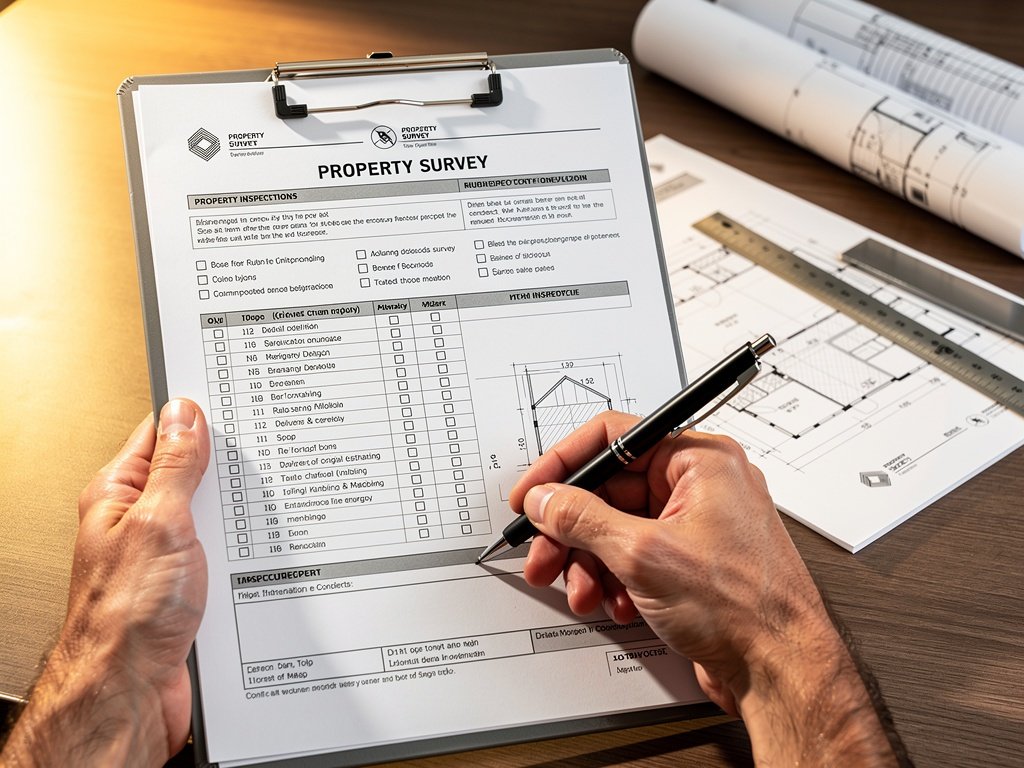
A Quick Overview: The RICS Survey Levels
RICS — the Royal Institution of Chartered Surveyors — introduced a standardised framework of three survey levels back in 2021, replacing the older terminology of HomeBuyer Report and Building Survey. Here's a quick summary:
- RICS Level 1: A basic condition survey, primarily suited to new-build properties. It provides a snapshot of the property's condition using traffic-light ratings, but no advice or market valuation.
- RICS Level 2 (Homebuyer Report): A mid-level survey for conventional properties in reasonable condition. Includes condition ratings, advice on defects, and an optional market valuation.
- RICS Level 3 (Building Survey): The most comprehensive survey, suitable for older, larger or unusual properties. Provides detailed analysis of defects, their causes and recommended remediation.
For most of our clients buying a property in Cannock, the choice comes down to Level 2 or Level 3. Let's look at both in detail.
What Is a RICS Level 2 Home Survey?
The RICS Level 2 homebuyer report is our most popular survey. It suits most conventional homes built since about 1930 that are in reasonable condition — think typical 1970s or 1980s semi-detached houses, modern terraces, or standard post-war detached homes.
During a Level 2 survey, our surveyor will carry out a thorough visual inspection of all accessible and visible elements of the property — inside and out. Each element is given a condition rating:
- Condition 1 (Green): No repair is currently needed.
- Condition 2 (Amber): Defects that need attention but are not urgent.
- Condition 3 (Red): Serious defects requiring urgent investigation or repair.
The resulting survey report is clear and easy to understand. It flags damp, structural movement, roof issues and other defects. An optional market valuation can also be included.
"A Level 2 survey saved us around £8,000. The surveyor spotted severe damp in the back bedroom that the seller had clearly known about but not disclosed. Without that survey, we would have bought the problem along with the house." — Sarah M., Cannock
When Is a Level 2 Survey Right for You?
A RICS Level 2 survey is generally appropriate when:
- The property was built after 1930 (though there are exceptions)
- It is of conventional construction (brick walls, tiled roof, standard layout)
- It appears to be in reasonable condition with no obvious signs of serious problems
- It hasn't been significantly extended or altered
- You're buying a flat or maisonette with a managing agent maintaining the building fabric
What Is a Level 3 Building Survey?
The Level 3 building survey — formerly known as the full structural survey — is the gold standard of home surveys. It is significantly more detailed than the Level 2 and goes further in examining the structure and fabric of the building.
Unlike a Level 2 survey, the Level 3 examines not just what the defect is, but why it has occurred and what you need to do to put it right. Our surveyor will access roof spaces, sub-floor voids where possible, and examine elements that are invisible during a standard inspection.
The resulting report is a comprehensive, detailed document that explains the construction of the building, the condition of each element, the causes of any defects found, and specific recommendations for remediation. It is, quite simply, the most thorough assessment of a property's condition available.
When Is a Level 3 Building Survey Appropriate?
You should strongly consider a Level 3 building survey when:
- The property is Victorian, Edwardian or pre-war (generally pre-1930s)
- It is a large, substantial detached house
- It has been significantly extended or converted (e.g., loft conversion, cellar conversion)
- It is of unusual or non-standard construction (e.g., timber frame, thatched roof, concrete panels)
- You already have concerns about the condition of the property
- It is a listed building or in a conservation area
- The property has been empty for a period of time
Here in Cannock and the surrounding Staffordshire area, we recommend Level 3 surveys for most Victorian terraces and any property with signs of subsidence — a real concern given the area's coal mining heritage. A Level 2 survey is not detailed enough to properly assess the risks associated with historic mining activity.
Level 2 vs Level 3: A Side-by-Side Comparison
| Feature | Level 2 | Level 3 |
|---|---|---|
| Condition Ratings | ✓ Traffic-light | ✓✓ Detailed narrative |
| Cause of Defects Explained | Limited | ✓ Yes, in full |
| Roof Space Inspection | If accessible | ✓ Always attempted |
| Sub-floor Inspection | — | ✓ Where accessible |
| Market Valuation | Optional add-on | Optional add-on |
| Typical Inspection Time | 2–3 hours | 4–6 hours |
| Best Property Types | Post-1930 conventional | Older, larger, unusual |
What About the Cost?
A common question is whether the extra cost of a Level 3 survey is worth it. Our view is simple: the cost of a building survey is almost always significantly less than the cost of an unexpected major repair. A Level 3 survey might cost a few hundred pounds more than a Level 2, but if it uncovers a £20,000 roof structure problem or serious subsidence, that investment pays for itself many times over.
For a personalised quote on a Level 2 or Level 3 survey in Cannock or the Staffordshire area, get in touch with our team.
Still Not Sure? Ask Us
If you're unsure which survey level is right for your property, we're happy to discuss it with you — for free, with no obligation. Simply describe the property to us and we'll give you our honest professional recommendation. That's the kind of service you get from an independent RICS regulated surveying practice that genuinely cares about your outcome.
Whatever you decide, the most important thing is that you do instruct a survey before committing to your purchase. As RICS regulated surveyors in Cannock, we have seen too many buyers skip the survey and later discover expensive surprises that a professional inspection would have revealed.