Victorian houses are among the most charming properties in the Staffordshire area — full of character, with high ceilings, bay windows and original features that modern builds can rarely replicate. But they also present unique challenges for buyers. Having surveyed hundreds of Victorian properties across Cannock, Hednesford, Rugeley and Lichfield over the past two decades, I can tell you what to expect when you instruct a Level 3 building survey on one.
Why Victorian Properties Need a Level 3 Survey
Victorian houses — generally those built between 1837 and 1901 — were constructed very differently from modern homes. They typically have solid brick walls (rather than cavity walls), lime mortar (rather than modern cement), suspended timber floors, original clay drainage, and roofing that may not have been properly maintained for decades. Many have been modified multiple times over the years, sometimes well and sometimes not.
A RICS Level 2 homebuyer report can identify defects, but it doesn't have the depth to fully assess the construction, causes of issues, or the structural implications of what's found. For a Victorian property, a Level 3 building survey is almost always the right choice — and we would strongly recommend it to any buyer.
Common Issues Found in Victorian Properties
1. Damp — Often Multiple Types
Victorian houses were built before the damp-proof course became standard. Many have no DPC at all, or their original slate DPC has deteriorated or been bridged. Rising damp is common, as is penetrating damp through defective pointing, failed render, or leaking gutters. We almost always find some form of moisture issue in Victorian properties.
2. Timber Defects — Wet Rot, Dry Rot and Woodworm
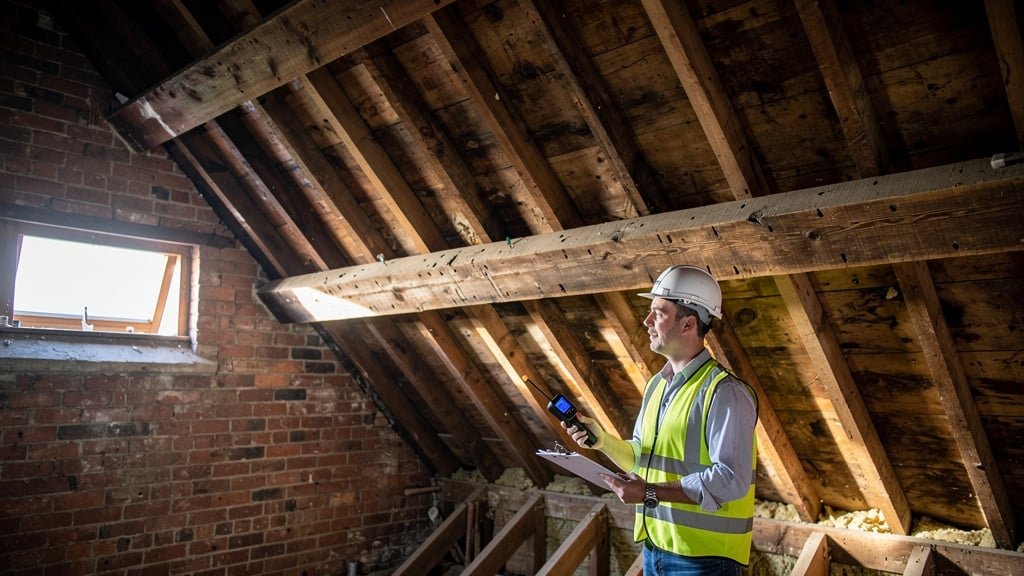
Victorian properties have timber everywhere: floor joists, roof structure, window frames, skirting boards. Where moisture has been present for extended periods, timber decay follows. Wet rot is more common and more easily treated; dry rot is the more serious concern, as it can spread through masonry and needs specialist treatment. We always inspect sub-floor voids (via floor hatches) and roof spaces as part of a Level 3 survey.
3. Roof Defects
Victorian roofs are typically pitched and covered in clay or Welsh slate. The original slate is often still excellent — slate can last well over 100 years — but flashings, ridge tiles, chimney pointing and guttering all deteriorate much faster. We commonly find slipped or missing slates, failed lead flashings around chimney stacks, and cracked or missing mortar to ridges. These are repairable but can be significant costs.
4. Chimney Stacks
Victorian terraces almost always have chimney stacks, and these are a frequent source of problems. Deteriorated pointing, cracked pots, failed damp proofing and leaning or bowing stacks are all common. In properties where chimneys are no longer used, internal flues may not be adequately capped, allowing moisture and wildlife ingress.
5. Movement and Structural Cracking
Some degree of settlement is entirely normal and expected in a 100+ year old building. The question is whether the movement is historical (stabilised long ago) or active (ongoing). Our survey will examine crack patterns, crack widths, and any distortion to the building to make this assessment.
6. Services — Outdated Electrics and Plumbing
While we don't test electrical or gas systems in a building survey, we note their visible condition and comment on their apparent age and condition. Many Victorian properties still have partially original plumbing (lead or iron pipes) and may have older wiring installations. We will recommend specialist testing where appropriate.
7. Extensions and Alterations
Most Victorian properties have been extended and altered at various times. The quality of these additions varies widely — a well-built 1960s extension presents different concerns from a poorly-built 1990s conservatory. We assess every addition on its own merits.
Will a Survey on a Victorian Property Put Me Off?
Honestly, it might — and sometimes that's the right outcome. But in most cases, a thorough survey gives buyers the confidence to proceed, armed with a clear understanding of what they are taking on and what it will cost to maintain or improve the property.
The important thing to understand is this: every Victorian property will have some issues. The survey's job is not to find a perfect property — they don't exist — but to tell you whether the issues are manageable, affordable and something you're comfortable with.
Some of our clients have used survey findings to negotiate very significant price reductions; others have walked away; most have proceeded with confidence and the knowledge they needed. That's what a good survey is for.