In over 20 years of building surveying in Staffordshire, I've inspected hundreds of properties with damp problems. And in that time, one thing hasn't changed: damp is still the most common significant defect our team finds during surveys — and it's also one of the most misunderstood.
Many buyers walk through a property, see a bit of discolouration on a wall, assume it's an old stain, and think nothing more of it. Others are actively misled — sellers have been known to repaint over damp patches just before a viewing. This is exactly why instructing a RICS regulated surveyor before buying a property in Cannock is so important.
In this article, I'll share the ten most common signs of damp that our surveyors look for — and explain what each one might mean for your purchase.
Why Is Damp Such a Problem in UK Homes?
Britain's wet climate makes damp a perennial issue in older housing stock. Properties built before the 1920s often predate modern damp-proof courses (DPCs), or their original DPCs have deteriorated. Even many post-war homes suffer from bridged or failing DPCs.
Left untreated, damp causes structural damage, destroys decorations, damages timber floors and joists, promotes mould growth (which poses health risks), and can dramatically reduce the value and saleability of a property.
The Three Main Types of Damp
Before we get to the signs, it helps to understand the three main categories of damp:
- Rising damp: Groundwater rising up through the walls by capillary action. Usually limited to the lower metre of walls.
- Penetrating damp: Water entering from outside through defective walls, roofs, windows or gutters. Can appear at any height.
- Condensation: Moisture in warm internal air condensing on cold surfaces. Very common in kitchens and bathrooms, but can occur anywhere.
The treatment for each is completely different, which is why correct diagnosis matters so much — and why a Level 3 building survey from a qualified surveyor is worth every penny.
10 Signs of Damp to Look For
1. Tide Marks on Lower Walls
One of the clearest signs of rising damp is a horizontal tide mark on the lower section of an internal wall, usually between 300mm and 1,000mm from floor level. The mark may be white (efflorescence from salts left as water evaporates) or brown/grey. If you see this, ask your surveyor to investigate further.
2. Damp or Musty Smell
Your nose is one of your best tools during a property viewing. A musty, earthy smell — particularly in rooms at ground level, cellars, or poorly ventilated spaces — is a strong indicator of damp, even when it's not visually obvious. It's often caused by mould growing in hidden areas.
3. Peeling or Bubbling Paint and Wallpaper
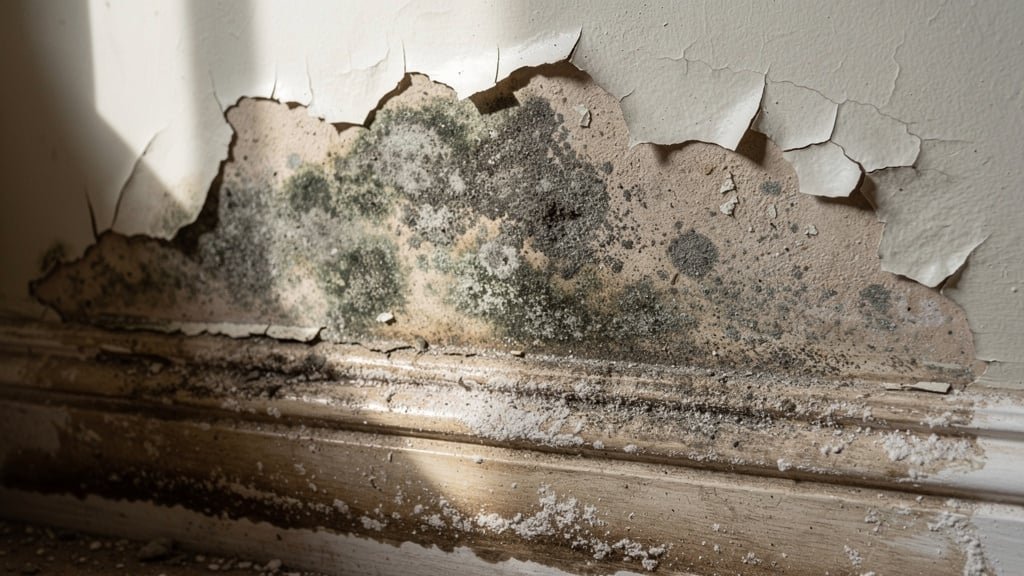
Paint and wallpaper that is peeling, blistering or bubbling away from the wall surface often indicates moisture behind the surface. This is a common sign of both rising damp and penetrating damp, and can sometimes be used to conceal more serious problems.
4. Visible Mould or Black Spots
Black, green or grey mould patches on walls, ceilings or around window frames are a tell-tale sign of persistent moisture. In bedrooms and living rooms (away from kitchens and bathrooms), this often indicates a ventilation or structural damp problem rather than normal condensation.
5. Staining on Ceilings
Yellow or brown circular stains on ceilings — sometimes called "tide marks" — almost always indicate a leak from above. This could be a leaking roof, a faulty flat roof section, or a plumbing leak from a bathroom above. Our surveyors always check ceilings below bathrooms and roof spaces carefully.
6. Damp or Spongy Plaster
If plaster feels soft, spongy, or has a crystalline white deposit on its surface (efflorescence), this points to moisture within the wall. Some sellers paper over this type of damage to disguise it — another reason why a physical inspection by a surveyor with a damp meter is so important.
7. Rusting Fixings and Fittings
Metal fixings — such as screws, brackets or skirting board fixings — that have rusted or left rust stains on adjacent surfaces are a sign of prolonged moisture exposure. In older properties, this can also indicate issues with embedded iron ties or lintels.
8. Rotting Timber
Wet rot and dry rot are both caused by moisture in timber. Check skirtings, floor boards, window frames, and door frames for soft, spongy or crumbling wood. In severe cases, dry rot can spread through an entire building's floor structure. It is one of the most costly defects to remedy.
9. Damp or Wet Window Sills and Reveals
Condensation pooling on window sills is common in cold weather, but persistent damp on window reveals (the inner face of the wall around the window opening) can indicate defective sealing, pointing issues, or lintel problems that allow water ingress.
10. Damp Patches on External Walls
From outside, look for dark patches on brick or render, green algae or moss growth, and areas where mortar is eroded or missing. These can all indicate that water is penetrating the wall. In rendered properties, look for cracks or areas where render has parted from the backing.
What Happens If a Damp Problem Is Found in Your Survey?
Finding damp in a survey doesn't necessarily mean you should walk away from a purchase. But it does mean you need to understand the cause, the extent, and the likely cost of remediation before you decide.
A good RICS Level 3 building survey will not only identify damp but will explain its cause and provide guidance on what needs to be done — whether that's remedial DPC injection, re-pointing, gutter repairs, improved ventilation, or something more significant.
Armed with this information, many of our clients successfully negotiate a reduction in the purchase price to cover the cost of repairs. We've seen buyers save anywhere from a few hundred pounds to many thousands using the evidence from their survey report.
"Alan found damp in three rooms of the house we were buying in Hednesford. It was caused by a blocked gutter and failed pointing — not rising damp as we feared. The remediation cost about £1,200. We knocked £3,500 off the asking price. Best £500 we ever spent." — Mark T., Hednesford
The Bottom Line
Damp is common, damp is treatable, and damp doesn't have to derail your purchase. But damp that hasn't been diagnosed — or that's been actively concealed — is a different matter entirely.
If you're buying a property in Cannock or the wider Staffordshire area and want the peace of mind of knowing exactly what you're taking on, our RICS certified home surveys are designed to give you exactly that.